Reproduction (or procreation or breeding) is the biological process by which new individual organisms – "offspring" – are produced from their "parent" or parents.
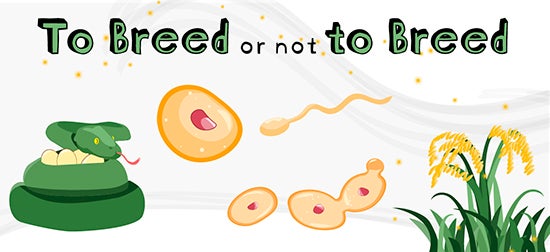
Reproduction, process by which organisms replicate themselves. Reproduction is one of the most important concepts in biology: it means making a copy, a likeness, and thereby providing for the continued existence of species.
reproduction, duplicate, copy, facsimile, replica mean a thing made to closely resemble another. reproduction implies an exact or close imitation of an existing thing.
Reproduction is one of the most fundamental attributes of any living thing. It is the process of production of viable offspring/s by organized bodies where the offspring can be an exact clone of the parent (asexual reproduction) or unique (sexual reproduction).
Reproduction is the biological process by which new individual organisms which are known as “offspring” are produced from already existing individuals known as “parents”.
Reproduction is a biological process by which living organisms give birth or reproduce the young ones. In this process, offspring is produced from the parent cells. An offspring is an individual organism that is a replica of the parent cells.
Reproduction, at its core, is the biological process by which new individual organisms – offspring – are produced from their ‘parent’ or ‘parents.’. It represents a fundamental feature of all known life and is crucial for the continuity and survival of species.
The ways in which life on earth creates new life is something that we call “reproduction.” Some parts of reproduction are similar not just in plants and animals, but in all organisms, including single-celled ones.
Living things reproduce either by making exact copies of themselves (asexual reproduction) or by combining genes from two parents (sexual reproduction). Asexual reproduction is simple and fast and is used by bacteria, most other microbes, and some plants and animals.